Canada LMIA Work Permit Requirements for Foreign Workers (2026)
Learn the Canada LMIA work permit requirements for foreign workers, including eligibility criteria, employer obligations, application steps, required documents, and key factors that can improve your chances of working in Canada.
Canada LMIA Work Permit Requirements for Foreign Workers (2026)
Canada remains one of the most attractive destinations for skilled foreign workers, offering competitive salaries, strong labor protections, and pathways to permanent residence. If you're planning to work in Canada in 2026, you've likely come across the term Labour Market Impact Assessment (LMIA). Understanding how the LMIA process works and the requirements for obtaining a Canada work permit can help you prepare a stronger application and avoid common mistakes.
An LMIA is a document that many Canadian employers must obtain before hiring a foreign worker. It demonstrates that no qualified Canadian citizen or permanent resident is available to fill the position, allowing the employer to recruit internationally.
High-Paying LMIA Jobs in Canada for Foreign Workers
How to Find Canadian Employers Offering Visa Sponsorship
What Is an LMIA?
A Labour Market Impact Assessment (LMIA) is issued by Employment and Social Development Canada (ESDC). A positive LMIA indicates that hiring a foreign worker is likely to have a positive or neutral impact on Canada's labor market.
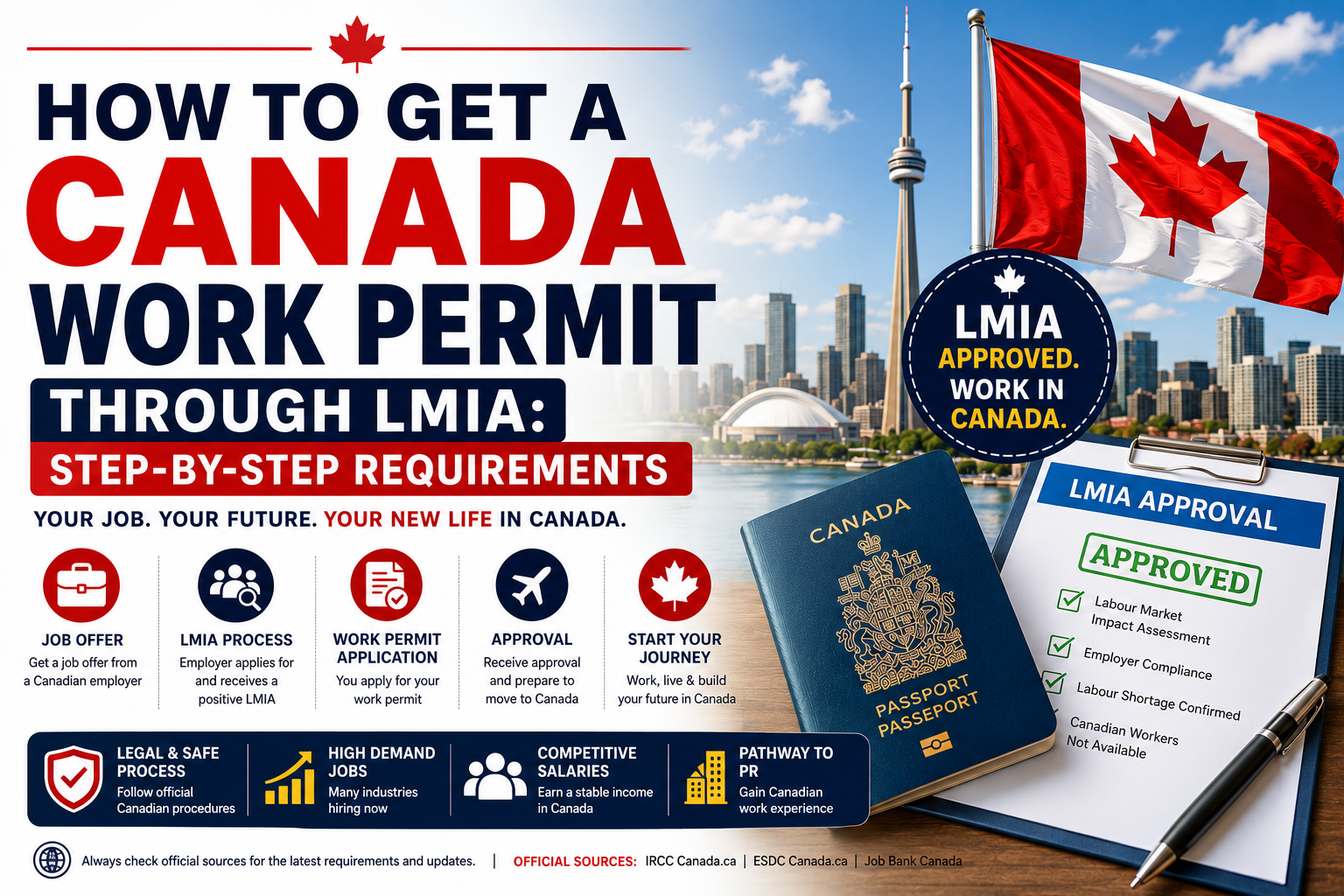
In most LMIA-supported work permit applications:
-
A Canadian employer applies for the LMIA.
-
The employer receives a positive LMIA decision.
-
The foreign worker uses the LMIA to apply for a work permit.
-
Immigration authorities assess the work permit application before issuing approval.
Not every Canadian work permit requires an LMIA. Certain categories, such as some international agreements and intra-company transfers, may be LMIA-exempt.
Canada LMIA Work Permit Requirements
To apply for an LMIA-based Canada work permit, foreign workers generally need:
-
A valid job offer from a Canadian employer
-
A positive LMIA (where required)
-
A valid passport
-
Supporting identity documents
-
Educational or professional qualifications, if applicable
-
Relevant work experience
-
Proof that they meet the job requirements
-
Medical examination (for certain occupations or countries)
-
Police clearance certificate when requested
-
Completed work permit application and required fees
Requirements vary depending on the occupation and individual circumstances.
Who Can Apply?
Foreign workers from many countries can apply for LMIA-supported jobs if they meet the employer's hiring requirements.
Applicants are commonly recruited for positions in:
Healthcare
Canada continues to experience demand for:
-
Registered nurses
-
Caregivers
-
Personal support workers
-
Medical laboratory professionals
Skilled Trades
Employers frequently recruit:
-
Electricians
-
Welders
-
Plumbers
-
Carpenters
-
Heavy equipment operators
Transportation
Growing industries often require:
-
Truck drivers
-
Delivery drivers
-
Logistics workers
Hospitality and Tourism
Opportunities may include:
-
Hotel staff
-
Restaurant supervisors
-
Cooks
-
Food service workers
Agriculture
Seasonal and permanent positions are often available for:
-
Farm workers
-
Greenhouse workers
-
Fruit pickers
-
Livestock workers
Documents You May Need
Preparing your documents before applying can help reduce delays.
Commonly requested documents include:
Valid Passport
Your passport should remain valid for the duration of your intended stay whenever possible.
Job Offer Letter
The employer should provide a formal employment offer outlining:
-
Job title
-
Salary
-
Working hours
-
Employment conditions
-
Employer details
Positive LMIA
Where required, your employer must provide the LMIA approval number or a copy of the positive LMIA.
Educational Certificates
Depending on the occupation, employers may request:
-
Diplomas
-
Degrees
-
Professional licenses
-
Trade certifications
Work Experience
Previous employment records can strengthen your application.
Examples include:
-
Employment letters
-
Reference letters
-
Pay slips
-
Employment contracts
How the LMIA Process Works
The process usually begins with the employer rather than the worker.
Step 1: Employer Advertises the Position
Canadian employers generally need to advertise the job locally before hiring internationally.
Step 2: Employer Applies for an LMIA
The employer submits an application to Employment and Social Development Canada with supporting evidence.
Step 3: Positive LMIA Decision
If approved, the employer receives a positive LMIA.
Step 4: Worker Applies for a Work Permit
The foreign worker submits the work permit application using the LMIA information and supporting documents.
Step 5: Immigration Decision
Immigration authorities review the application and determine whether to issue the work permit.
Common Reasons Applications Are Delayed
Several issues can slow processing times, including:
-
Missing documents
-
Incomplete application forms
-
Expired passports
-
Incorrect employment information
-
Medical examination delays
-
Additional background checks
Reviewing every document carefully before submission can help avoid unnecessary delays.
Can an LMIA Lead to Permanent Residence?
In some cases, yes.
Canadian work experience gained through an LMIA-supported job may strengthen eligibility for immigration pathways such as Express Entry or Provincial Nominee Programs, depending on your circumstances and current immigration policies.
However, a work permit does not automatically result in permanent residence.
Tips Before Applying
If you're planning to work in Canada, consider these practical steps:
Research the Employer
Only apply through legitimate employers and verify job offers carefully.
Keep Your Documents Updated
Ensure your:
-
Passport
-
Resume
-
Educational documents
-
Reference letters
-
Professional certifications
are current before submitting applications.
Understand the Job Requirements
Read every job description carefully and apply only if you genuinely meet the qualifications.
Beware of Scams
No employer or recruitment agency can guarantee a Canadian work permit or permanent residence.
Be cautious of anyone requesting payment in exchange for guaranteed employment or immigration approval.
Is an LMIA Work Permit Worth It?
For many foreign workers, an LMIA-supported work permit offers the opportunity to gain valuable international experience, earn competitive wages, and potentially qualify for future immigration pathways.
Canada continues to recruit workers across healthcare, skilled trades, agriculture, transportation, hospitality, and technology, making it an attractive option for qualified professionals worldwide.
Success depends on meeting the eligibility requirements, securing a legitimate job offer, and submitting a complete and accurate application.
Frequently Asked Questions
What is an LMIA in Canada?
An LMIA is a Labour Market Impact Assessment issued by Employment and Social Development Canada to determine whether hiring a foreign worker will have a positive or neutral impact on the Canadian labor market.
Can I apply for an LMIA myself?
No. In most cases, the Canadian employer is responsible for applying for the LMIA before the foreign worker applies for a work permit.
Do all Canadian work permits require an LMIA?
No. Some work permits are exempt from the LMIA requirement under specific immigration programs and international agreements.
How long does LMIA processing take?
Processing times vary depending on the job category, application volume, and government processing schedules. Applicants should always check the latest official timelines.
Can I change employers after receiving an LMIA work permit?
Many employer-specific work permits only authorize you to work for the employer named on the permit. Changing employers may require a new LMIA and work permit, depending on your situation.
Can an LMIA work permit lead to permanent residence?
It may contribute toward eligibility for certain Canadian immigration programs, but it does not guarantee permanent residence.